Il vecchio che continuava a comprare due biglietti del tram ogni mattina finché il controllore non lo seguì.
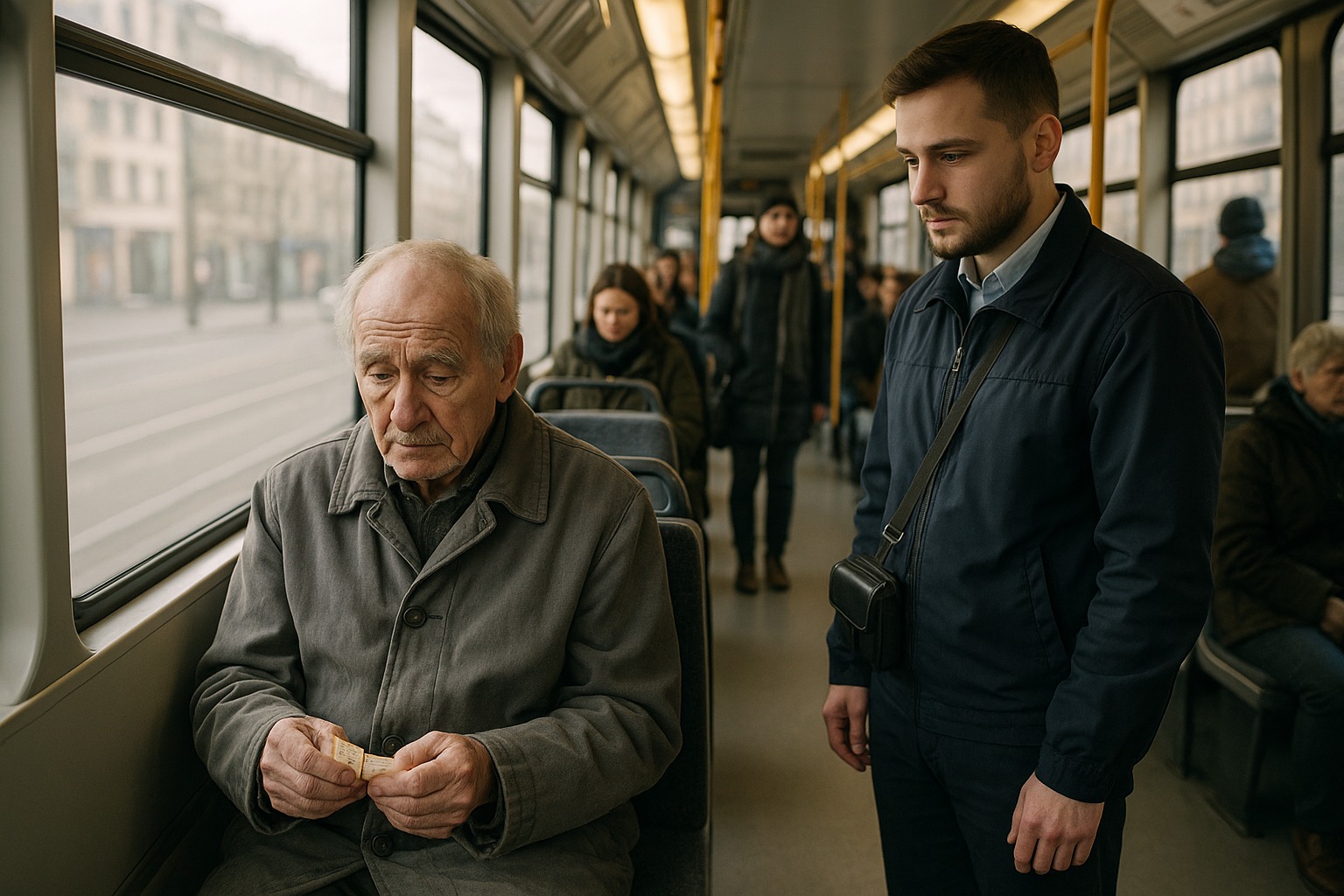
Per tre mesi, Liam lo osservò dal piccolo sedile del controllore in fondo al tram. Stessa ora, stessa fermata. Un uomo magro con un cappotto grigio logoro, i capelli bianchi accuratamente pettinati all’indietro, le mani tremanti che stringevano un portafoglio di pelle sbiadito. Chiedeva sempre due biglietti.
“Due, per favore. Per il Riverside Hospital”.
La sua voce era morbida ma ostinata, come se qualsiasi discussione gli scivolasse semplicemente addosso. Infilava entrambi i biglietti in tasca, poi si sedeva da solo vicino al finestrino, fissando il sedile vuoto accanto a lui con una strana, silenziosa tenerezza.
All’inizio, a Liam non importava. Le persone erano strane; la città era piena di piccoli rituali. Ma il vecchio continuava a venire. Pioggia, neve, vento gelido: sempre due biglietti. Sempre la stessa frase. Sempre lo stesso sguardo al sedile vuoto.
Una mattina, quando non c’erano quasi passeggeri, Liam provò a scherzare.
“Sa, signore, potrebbe comprarne solo uno. Non lo dirò a nessuno.”
Le dita del vecchio si bloccarono sul portafoglio. Alzò gli occhi azzurri pallidi su Liam e per un attimo ci fu un lampo di confusione, come quello di un bambino che ha perso la madre in mezzo alla folla.
«No», disse tranquillamente. «Due. Sempre due».
Liam aprì la bocca per rispondere, poi si fermò. Qualcosa in quello sguardo – un misto di paura, testardaggine e… speranza – gli bloccò la lingua. Tagliò i due biglietti e li consegnò senza aggiungere altro.
I giorni si confondevano. Liam cambiò percorso, poi tornò alla linea Riverside. Ogni volta, il vecchio era lì, con il suo solito cappotto grigio e il suo solito posto vuoto accanto.
«Forse sua moglie è in ospedale», suggerì una volta Mark, l’autista, scrollando le spalle. «Forse è il suo modo di… non lo so. Affrontare la situazione».
«Ma perché pagare per un posto vuoto?», mormorò Liam. «Non è ricco. Guarda le sue scarpe».
Le scarpe erano pulite ma screpolate, con le suole quasi bianche ai bordi. Liam continuò a pensarci a lungo dopo il turno.
La svolta arrivò un martedì.
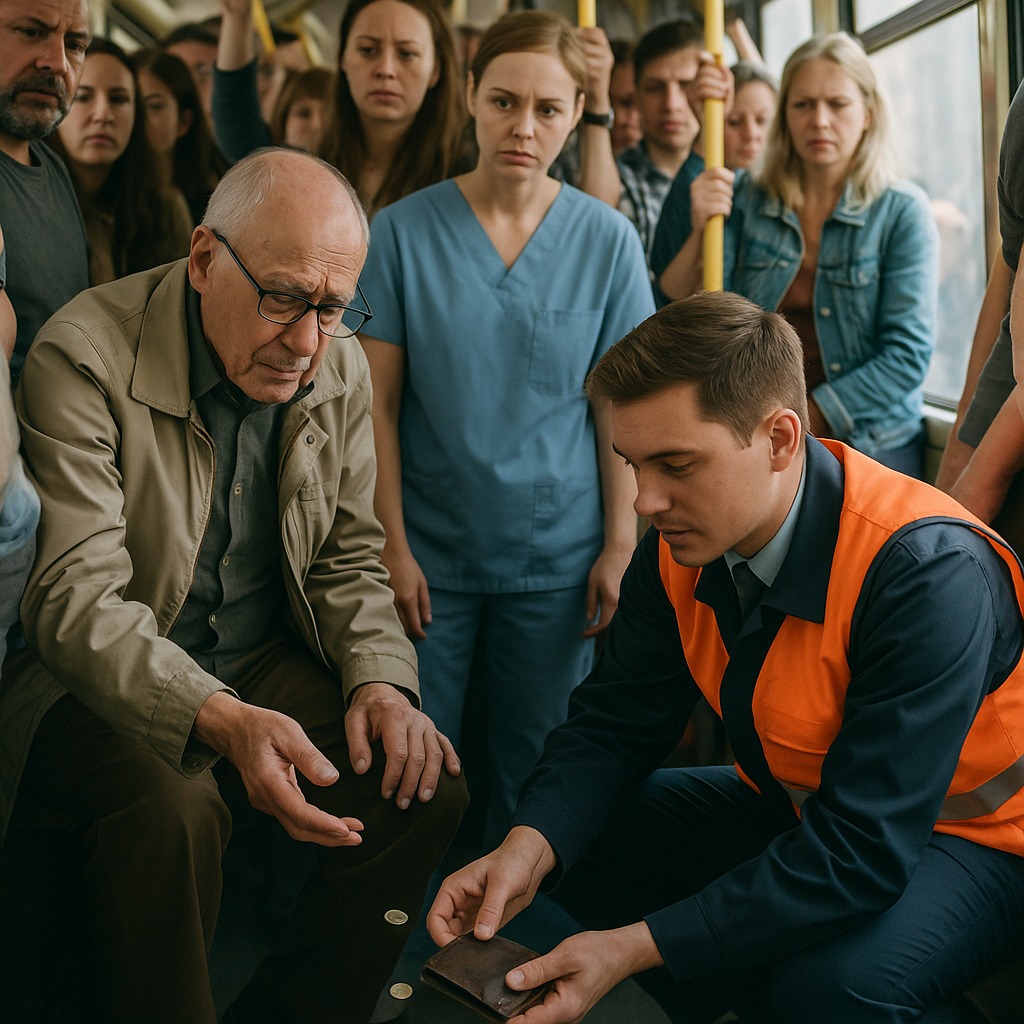
Il tram era insolitamente affollato, studenti e infermieri stipati come sardine. Quando il vecchio salì, tenendosi con cura al corrimano, non c’era quasi più spazio. Guardò comunque Liam con la sua solita richiesta.
«Due biglietti. Riverside Hospital».
«Signore, non c’è posto a sedere», disse Liam gentilmente. «Vede? La gente è in piedi. Ne prenda solo uno, per favore».
La mano del vecchio iniziò a tremare così violentemente che il portafoglio gli scivolò e cadde, spargendo monete sul pavimento. La gente brontolò, si spostò, fece un passo indietro. Liam si chinò per aiutarlo e, mentre lo faceva, sentì il vecchio sussurrare, quasi in silenzio, come se parlasse a qualcuno che solo lui poteva vedere.
“Non preoccuparti, Anna, ci sederemo insieme. Ci sediamo sempre insieme”.
Liam si bloccò.
Si raddrizzò lentamente e studiò il volto dell’uomo. Il modo in cui muoveva le labbra, il modo in cui i suoi occhi guardavano lo spazio vuoto accanto a lui, tenero e dispiaciuto.
“Signore… chi è Anna?” chiese Liam a bassa voce.
Il vecchio sbatté le palpebre, come se fosse sorpreso che ci fosse qualcun altro lì.
«Mia moglie», rispose. «Odia i tram. Le fanno venire le vertigini. Quindi mi siedo vicino al finestrino e le tengo la mano. Lei chiude gli occhi. La aiuta».
Una giovane donna lì vicino sorrise tristemente. «Che cosa dolce», mormorò.
Liam deglutì. «E… dov’è adesso?»
Il vecchio sembrò sinceramente confuso.
«In ospedale, ovviamente. Andiamo lì tutti i giorni. Fa le cure al quinto piano. Dopo si siede vicino al finestrino e mi dice quali nuvole assomigliano ad animali».
Un’infermiera tra la folla si irrigidì. «In quale reparto?», chiese all’improvviso.
«In oncologia», rispose il vecchio con un orgoglio formale, come se avesse memorizzato la parola per renderla meno spaventosa.
Il tram sferragliò sul ponte. Nessuno parlò.
L’infermiera si avvicinò. «Qual è il suo nome completo?».
«Anna Collins», rispose lui. «La mia Anna».
Liam vide l’infermiera impallidire.
«Signore…», esordì con cautela. «Io lavoro al Riverside. In oncologia. Noi… abbiamo perso Anna Collins quasi sei mesi fa».
Un mormorio attraversò il tram. Qualcuno sussultò. Qualcun altro mormorò: «Oh Dio».
Il vecchio ridacchiò, un suono piccolo e educato.
«No, no, si sbaglia», disse. «Siamo stati qui ieri. Era stanca e è rimasta a letto. Ma ci andremo oggi, vero, Anna?»
Si voltò verso il sedile vuoto accanto a lui, il sorriso che si addolciva, la mano che sfiorava l’aria come se toccasse dita invisibili.
Liam felt something twist sharply in his chest.
The nurse bit her lip. “Sir, I… I held her hand that night,” she whispered. “I’m so sorry.”
The old man’s smile faltered. For a heartbeat, his eyes cleared, like clouds breaking for a split second.
“Six months?” he repeated. “No. That can’t be. Yesterday we…”
He stopped. His gaze drifted to the window, then back to the empty seat. A faint tremor ran through his shoulders, as if a memory was trying to surface and drown him.
“I promised her,” he said at last, his voice barely audible. “I promised I’d never leave her alone in that place. Not even for a day. She was so afraid. So I… I buy two tickets. We go together.”
The tram was silent. Even the usual rattle of metal on rails seemed to retreat.
A teen boy standing by the door wiped his eyes roughly, pretending something had gotten into them.
Liam felt ashamed of every annoyed thought he’d had. Of every time he had rolled his eyes at the two tickets.
“Sir,” he said quietly. “You don’t have to pay for her ticket anymore. I… I’ll cover it. For as long as you need.”
The old man looked at him, bewildered.
“But then she’ll stand,” he whispered. “She hates standing. It makes her dizzy.”
Liam swallowed, then did the only thing he could think of.
He stepped down the aisle, gently clearing space with a raised hand.
“People, please,” he said, his voice thick. “Could someone move a bit? We need an empty seat here. Two seats, actually.”
Without a word, a young man stood up and another slid aside. Soon there were two empty seats by the window. The old man sat down carefully, placed his wrinkled hand on the seat beside him and exhaled with visible relief.
“There, Anna,” he murmured. “Just like always.”
When they reached Riverside, Liam hesitated. His shift was not over, and he wasn’t allowed to leave the tram. But as the old man stood up, folding his two tickets neatly, Liam made a decision.
“Mark, cover for me,” he said to the driver. “Ten minutes.”
He jumped down onto the pavement and walked beside the old man toward the hospital.
“Do you have children?” Liam asked quietly.
The old man smiled faintly. “One daughter. Lives abroad. She calls on Sundays. She cries a lot. I tell her everything is fine. Why should she carry my sadness too?”
They entered the bright, sterile lobby. The nurse from the tram caught up with them and silently joined their little procession.
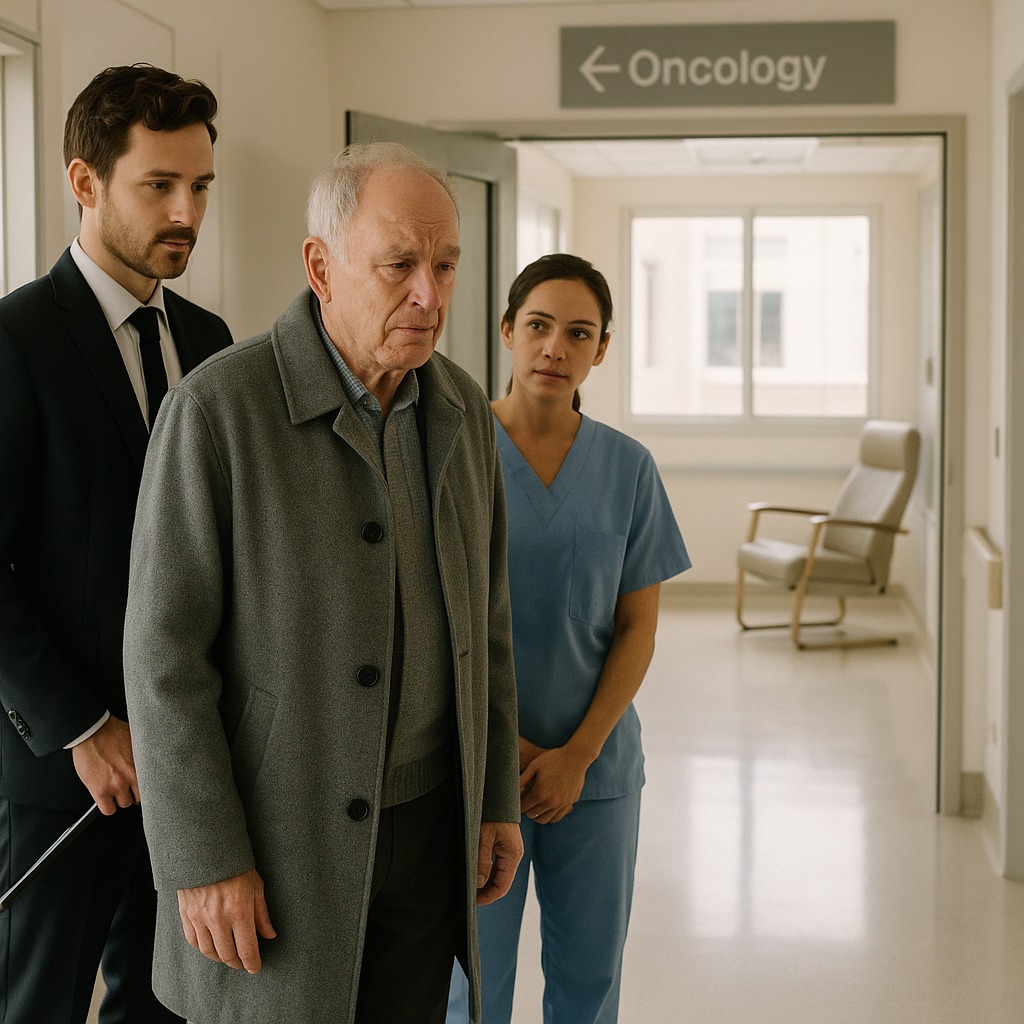
On the way to the fifth floor, the old man’s steps grew slower. At the door to the oncology ward he stopped.
“She used to sit right there,” he said, pointing to a chair by the window. “She said the clouds looked like ships. Said one day she’d send me a postcard from the biggest one.”
His voice broke on the last word.
For the first time, he didn’t go in. He just stood there, staring at the empty chair.
The nurse laid a hand on his sleeve. “We remember her,” she said softly. “She talked about you all the time. How you never missed a single day.”
The old man’s shoulders shook once.
“I thought if I kept coming,” he whispered, “she’d have to be here. Somewhere. Waiting.”
Liam stepped closer, careful not to touch him, just standing at his side.
“Maybe,” Liam said slowly, “she’s the one riding the tram with you now. Making sure you’re not the one who’s alone.”
The old man closed his eyes. A single tear slid down his cheek, catching the harsh hospital light.
“Then I should keep buying two tickets,” he said after a long pause.
Liam opened his mouth to protest, then stopped. Who was he to take away the only thread holding this man together?
“Then I’ll keep making sure you both have a seat,” Liam replied.
They walked back to the tram stop in silence. When the tram arrived, Liam helped the old man on board and watched him settle into his usual place, hand resting gently on the empty seat.
From that day on, no one on the Riverside line ever questioned the two tickets again. Sometimes, when the tram was full, people would stand without being asked, leaving the seat beside him empty, as if they, too, could feel a quiet presence there.
And Liam, every morning, clipped two tickets and placed them into the trembling hand, feeling the weight of a love that refused to learn how to be alone.